
One-Pot Creamy Noodles
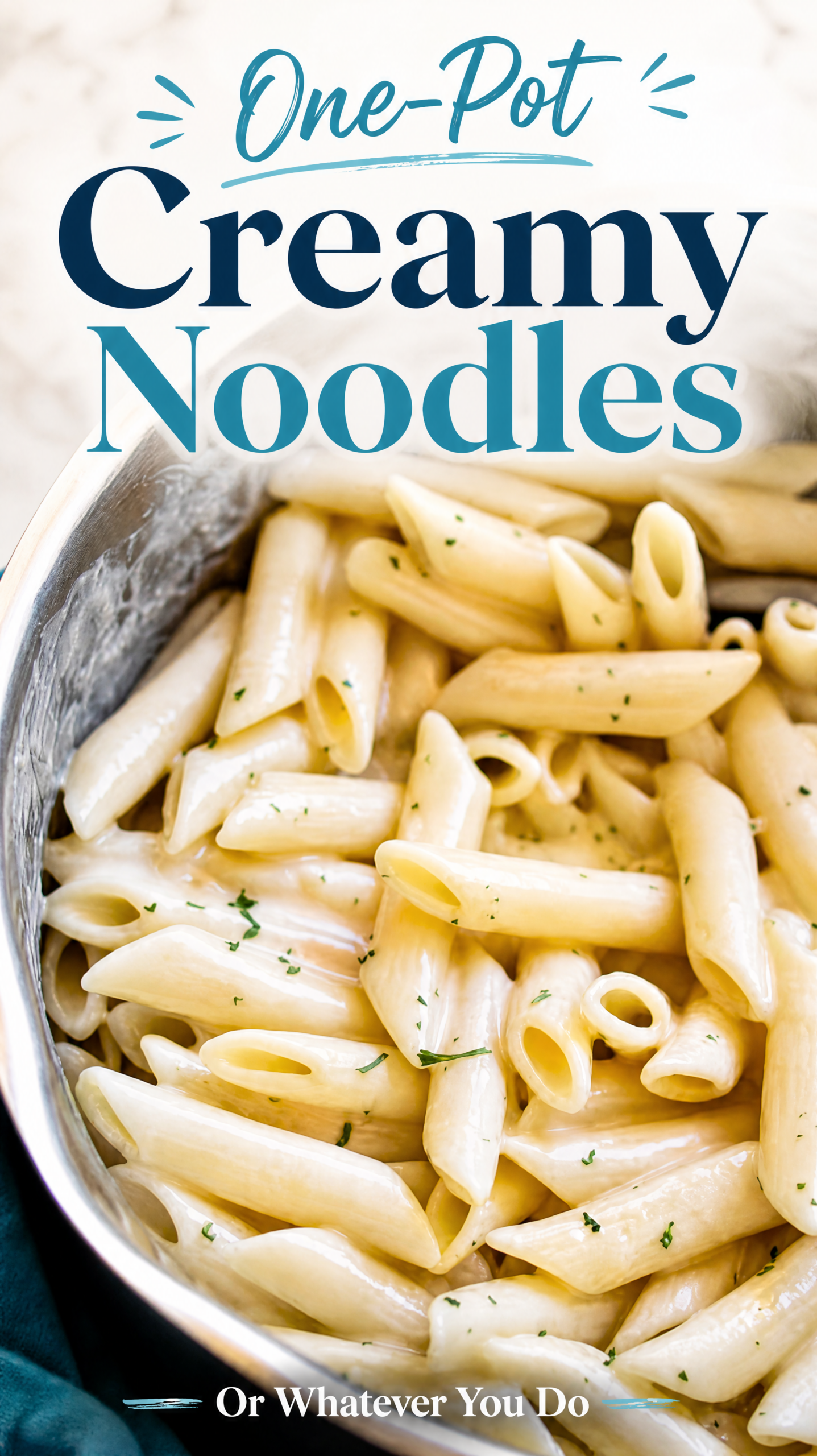
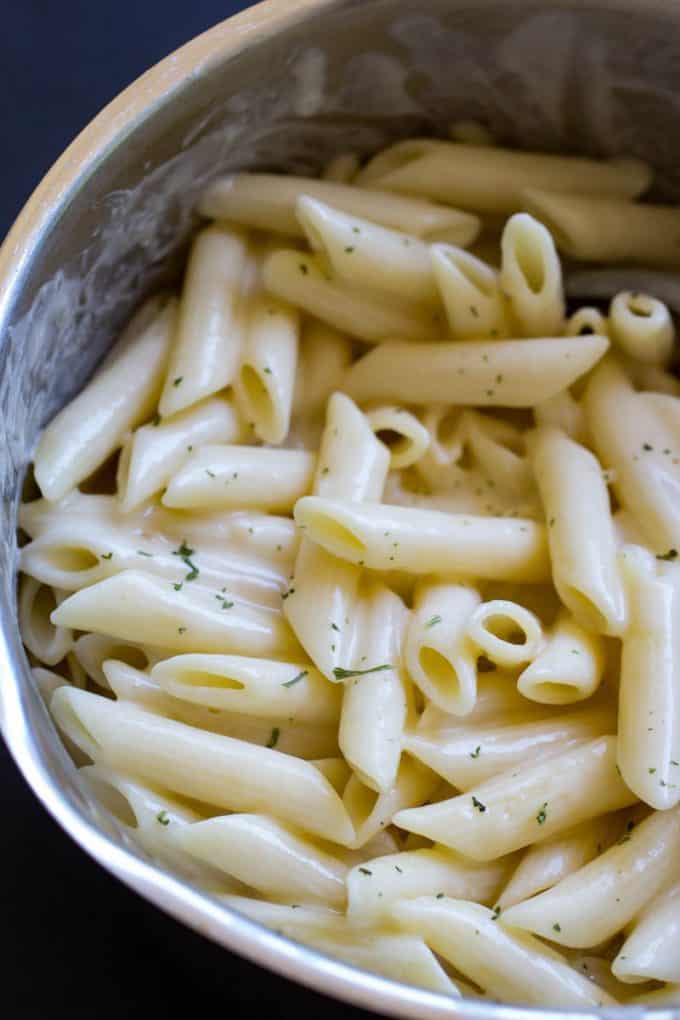
One Pot Creamy Noodles are a fast, family-friendly pasta side dish with a smooth, cheesy sauce built right in the same pot the noodles cook in. No heavy cream, no draining, and no extra dishes to scrub after dinner.
One-Pot Creamy Noodles
This one has been a go-to in our house for years, and it holds up because it's genuinely fast and forgiving. Everything, pasta included, cooks together in a single pot, and the starchy cooking water becomes the base of the sauce once the milk and cheese go in.
A few things make a big difference here. Use good quality pasta, since cheap noodles can turn mushy in a one-pot method. Stir often while the pasta simmers so it doesn't stick or scorch on the bottom of the pot. And once you're ready to add the milk and cheese, turn the heat down first. Adding dairy over high heat is the fastest way to end up with a broken, grainy sauce instead of a smooth one.
Feel free to swap the pasta shape. Bowtie, rotini, or shells all work well here, just keep an eye on cook time since shapes vary.
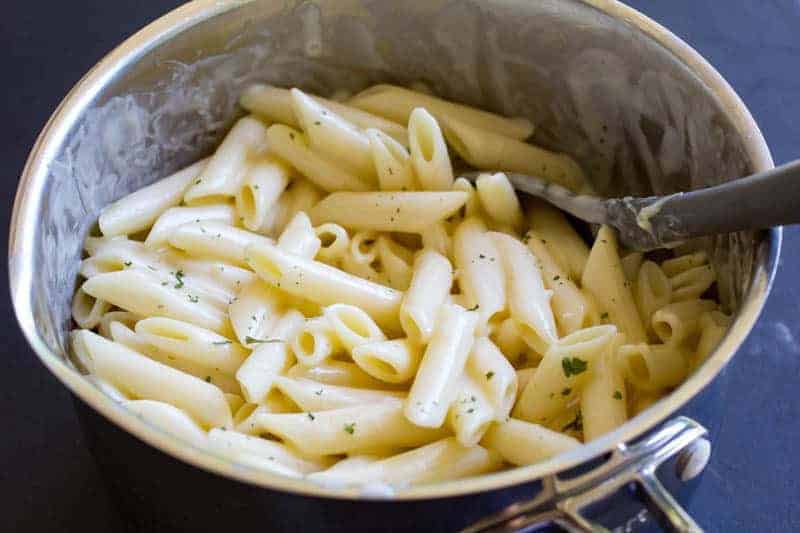
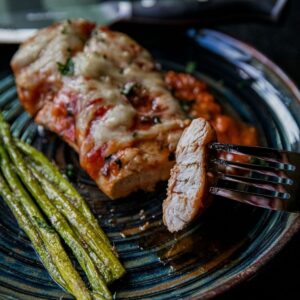
With this creamy noodles recipe, I serve it up quite a bit as a side to a nice Grilled Prime Rib, Thick Bone-In Pork Chop, or even my Grilled Shrimp Scampi.
Why You'll Love This Recipe
- One Pot, Less Cleanup - Everything cooks together, so there's just one pot to wash when dinner's done.
- Ready In 15 Minutes - From stovetop to table in under 15 minutes, start to finish.
- No Heavy Cream Required - Whole milk or half and half gets you a smooth, creamy sauce without a special trip to the store.
- Flexible Pasta Shape - Penne is our go-to, but bowtie, rotini, or shells all work too.
- Kid-Approved - Mild, cheesy, and simple enough that picky eaters ask for seconds.
Try this Chicken Artichoke Pasta!
Recipe Shopping List
Wondering if you have to hit the store? Here's the list of items you'll need to make this recipe. For specific amounts, please refer to the printable recipe card at the bottom of the post.
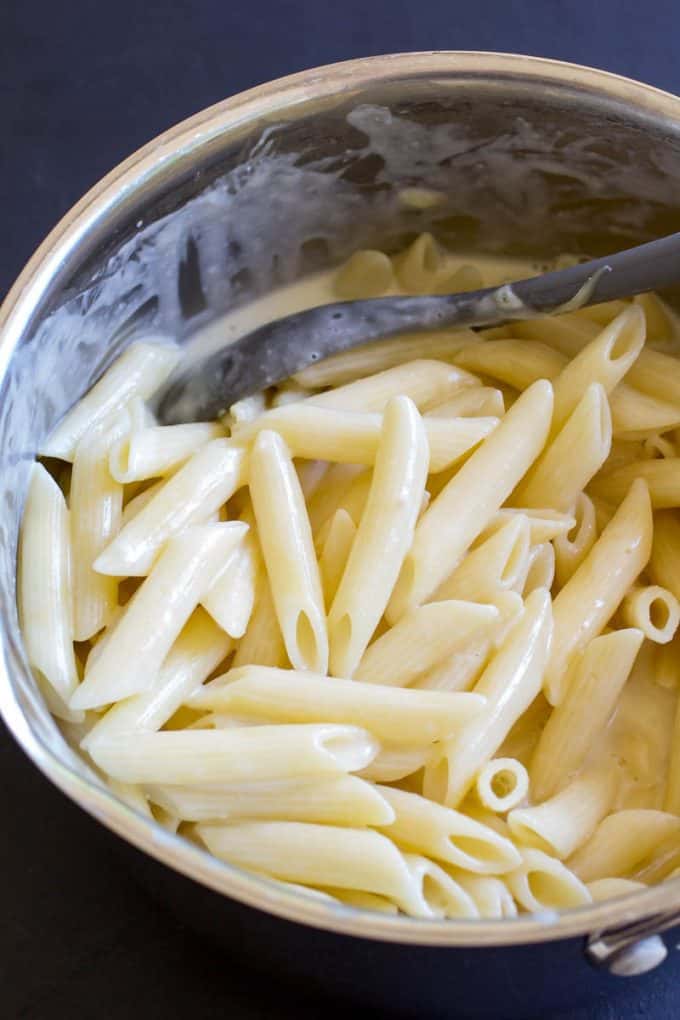
- Penne Noodles - Holds its shape well in a one-pot method and grabs onto the sauce nicely. Swap in your favorite short pasta shape if you'd like.
- Water - Cooks the pasta right in the pot and becomes part of the sauce, so there's nothing to drain off.
- Salt - Seasons the pasta while it simmers.
- Salted Butter - Builds the base of the sauce and adds richness.
- Mustard Powder - Just a small amount adds a subtle tang that rounds out the cheese sauce. You won't taste "mustard," just a little something extra.
- Whole Milk or Half and Half - Stirred in at the end for a smooth, creamy finish.
- Cayenne - Optional, and just a pinch for a little background heat.
- Fresh Herbs - Thyme, basil, parsley, or oregano all work well. Use whatever you have on hand.
- Shredded Cheese - Parmesan or mozzarella both melt in beautifully.
Serve with Traeger Prime Rib Roast!
How To Make This Recipe
This is just the overview so you can see what you're actually getting into here. When you are cooking, you'll want to use the full recipe at the bottom of the page.
- Start Pasta - Add the penne, water, salt, butter, and mustard powder to a large pot.
- Simmer - Bring to a simmer over medium heat, stirring frequently so the pasta doesn't stick. Let it cook until the pasta is tender.
- Lower Heat - Once the pasta is tender, turn the heat down to low.
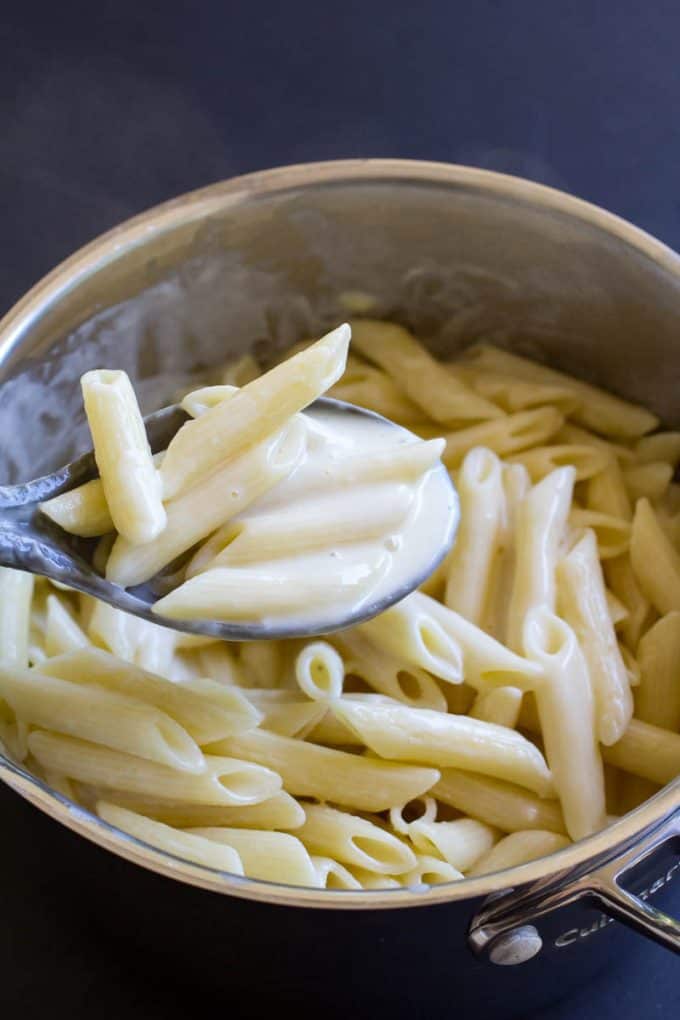
- Make Sauce - Add the milk, cayenne, herbs, and cheese. Stir until the cheese is fully melted and the sauce is smooth.
- Serve Hot - Serve right away while the sauce is warm and creamy.
Try with Grilled Shrimp Scampi!
Recipe Tips
- High-quality Noodles - You want al dente pasta at the end, not much. High-quality pasta really makes a big difference.
- Liquid - Ensure that you have enough fluid in your pan. As the pasta cooks, it will absorb the liquid, and you don't want to not to have enough liquid or your pasta will burn.
- Stir Often - One pot pasta recipes do need to be stirred often as they can stick pretty easily. Make sure to stir your pasta frequently!
- Big Enough Pot - Because you are adding more ingredients into your pot, you want to make sure it is large enough to hold the ingredients. For this recipe, there are no meat or veggies going in, but if you were to make a one-pot pasta that had meat and vegetables you need to account for that. Ask me how I know. 😀
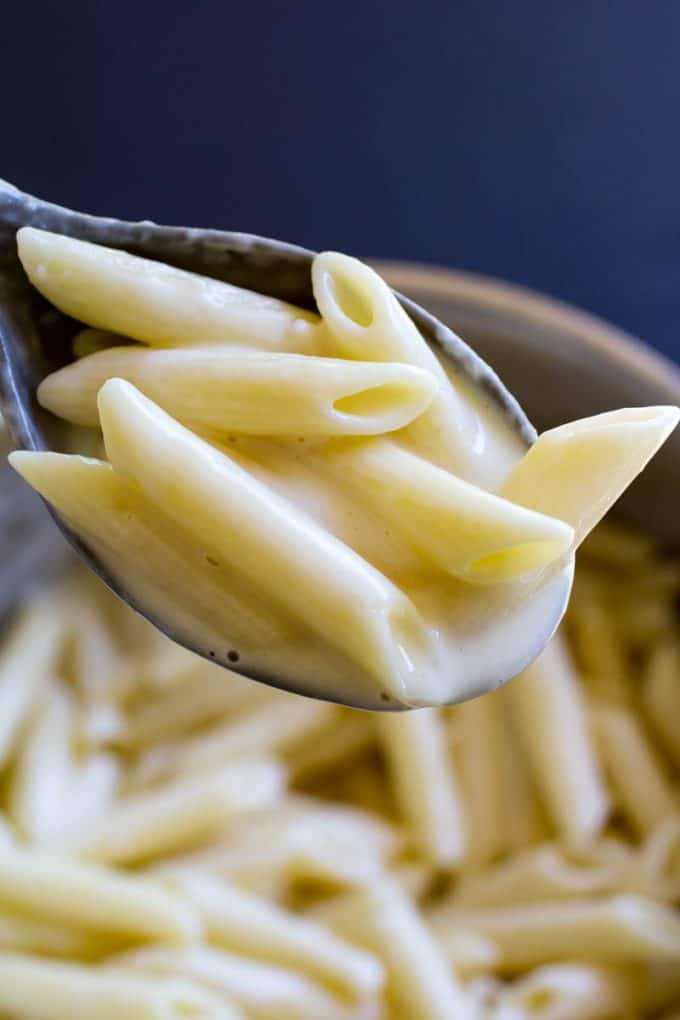
- Slow Stir - Make sure when you are pouring in any milk based items that you slowly mix them in at the end, and on a lower heat setting. If the temperature is too hot, it can curdle the milk. Slowly incorporating it at a lower temperature is best.
Recipe FAQ
No. All of the cooking liquid becomes part of the sauce, so there's nothing to drain. Just make sure you're using the water amount listed in the recipe card.
Yes. Bowtie, rotini, or shells all work well here. Cook times vary by shape, so check the pasta for doneness before moving on to the sauce.
You can, but gluten-free pasta cooks a little differently than regular pasta and may need less water or a shorter simmer time. Check it early and often so it doesn't overcook.
This usually happens when the heat is too high or the cheese gets added too fast. Turn the heat down to low before adding the milk, then stir the cheese in gradually so it melts evenly instead of seizing up.
Whole milk or half-and-half both work well and give you the creamiest results. Lower-fat milk can be used in a pinch, but the sauce will be thinner and less rich.
Try my Traeger Chili Mac!
Serve This With...
More Pasta Recipes
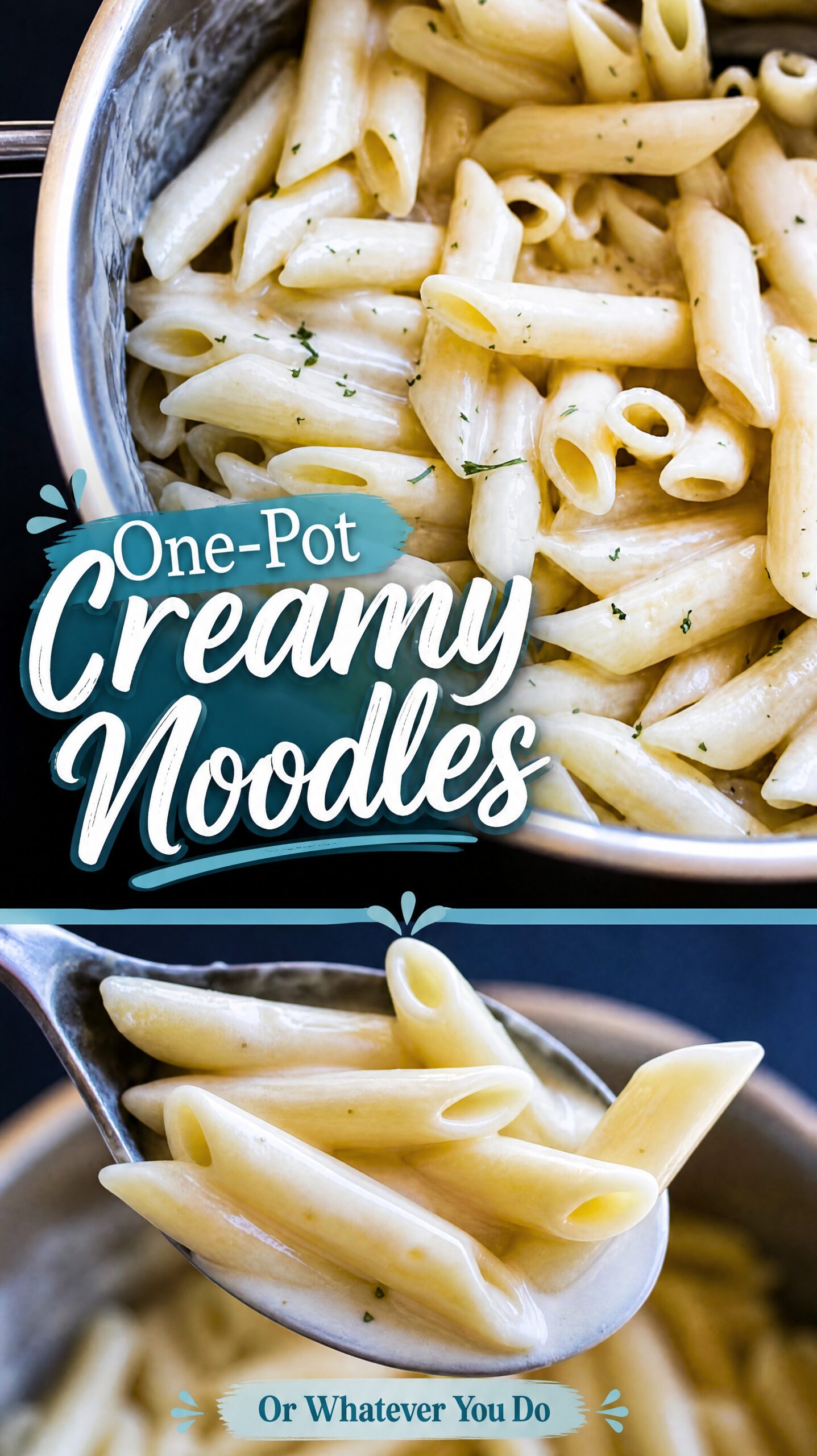
One-Pot Creamy Noodles
This easy one-pot dish is super creamy and also SUPER easy! You're going to make this over and over!
Ingredients
- 1 pound penne noodles
- 6 cups water
- ½ teaspoon salt
- 4 tablespoons salted butter
- ¼ teaspoon mustard powder
- ½ - 1 cup whole milk or half and half
- 1 pinch cayenne (optional)
- ½ teaspoon chopped fresh herbs (thyme, basil, parsley, oregano are all good choices! pick your favorite!
- 1 cup shredded cheese, parmesan or mozzarella work really well
Instructions
- Place the penne, water, salt, butter, and mustard powder. Bring to a simmer over medium heat, stirring frequently. Let simmer until the pasta is tender. Reduce the heat to low.
- Stir in the milk, cayenne, herbs, and cheese. Stir until the cheese is melted and combined.
- Serve hot!

Can you please provide the rest of the instructions for this recipe?
Thank you!
Yes! So sorry about that. Thanks for letting me know!
Great recipe!! It was very tasty and super easy.
Thanks!
Thanks so much, Nathaly! I'm so glad that you like it!
Got to adding cheese...than no more instructions??
Adding cheese is the last step. 😀 If you are having trouble viewing, I just had to fix my recipe card and they were removed for about a minute. If you reload the page, it should be back though! Thanks!
No instruction to drain pasta and that’s a lot of water.
That's as much water as is needed for high-quality penne. No need to drain. In fact, some types of noodles may even require a little MORE water be added. That's detailed in the post. Thanks for stopping by!
I’m assuming you drain the water before you add the milk and cheese?Sounds like a good recipe....
Nancy R.
Nope! In this recipe, you don't have to drain anything. The cooking liquid is incorporated into the sauce, so make sure to use the measurements provided. Thanks for stopping by!
Has anyone tried this with gluten free pasta?
A good recipe, i wonder if it were a but more prescriptive around the types and amounts of spices and cheeses. I used this as a guideline, turned out great!
Some recipes, I like to keep them a little vague. Mostly because I make it a different way every time, and it always works out right. They are designed to be flexible, and to adapt to what you have on hand. Many of my other recipes are much more specific. Glad you enjoyed this one!
What a waste of noodles and cheese. My freshly grated cheese turned into a ball. It is a great idea but somehow I made a mess
Oh man! That's a bummer. I've never had that happen with this recipe. What kind of cheese did you use?
I made this according to instructions and it still seems like too much liquid. I let it sit for 15-20 min to see if it would thicken and it didn't. The taste is there, but it's way too watery.
Ive found that if you don’t use the high quality noodles that can happen. Im talking the kind from italy, that are thick and really absorb water. What I tend to do is add the noodles to the pot, and fill with liquid until they are almost covered. Then add more as needed, if I’m using store-brand noodles or a different shape.